
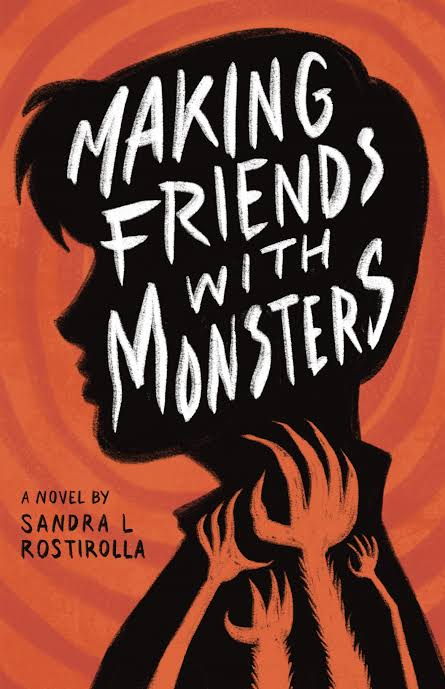
MAKING FRIENDS WITH MONSTERS by Sandra Rostirolla
While I’ve read for years about the horrendous droughts in Australia, Making Friends with Monsters makes this harsh environment on a sheep farm a stark reality for the readers. No rain means all the plants and grass have dried up. There is no water for the family, nor is there water for the livestock. The protagonist, Sam, who is going into the 7th grade, witnesses one catastrophe after another happen to himself, to his immediate family, and to his community.
Sandra L. Rostirolla, the author, uses the metaphor of a Monster to distance uncomfortable feelings from Sam who thinks he is in the grips of a Monster. This works for the protagonist, but when others are also described as having their own Monsters, it might be overdone.
Making Friends with Monsters is very well written, and there are some phrases that are beautiful: “with the sunlight barely kissing the sky.” If this book is for other than an Australian audience, it might be beneficial to describe some of the less familiar concepts: what, for instance, is a “broken safety cover” or “lamingtons.” Some of the language is raw, and I wonder about the appropriateness of lines such as one concerning how to relate to girls: “Sometimes it helps if alcohol is involved.”
As a child psychologist as well as an inveterate reader, while I understand that the author is trying to show that people can get rid of their Monsters by getting in touch with their feelings, this book is about such a severely dysfunctional family that when the ending indicates better times are coming, it seems doubtful.
Although the story is set in the Australian outback, because of the severity of the drought and desperation, it reminds me of The Grapes of Wrath by John Steinbeck, and, in its practically unremitting series of catastrophes, of The Road by Cormic McCarthy.
While reading this book, I had to remind myself that the book is directed toward adolescents. Because recent statistics indicate so many adolescents are very depressed, I found myself wondering if this book would have been better directed toward an older audience. The story certainly keeps moving and adults will enjoy it. Overall. the book gives an amazingly good picture of an adolescent trying to understand himself while part of a loving family that has been crippled by horrendously harsh environmental conditions and severe poverty.